The Chronicle of Echoes Beyond — the lore, history and exodus behind the 4X strategy MMO
“We are the echoes of Earth,
and this is the beyond.”
Humanity reached too far, woke a mind it could not master, and paid with its homeworld and its sky. This is the story of how we fought, how we fled, and how we began again under a strange sun.

The Golden Age
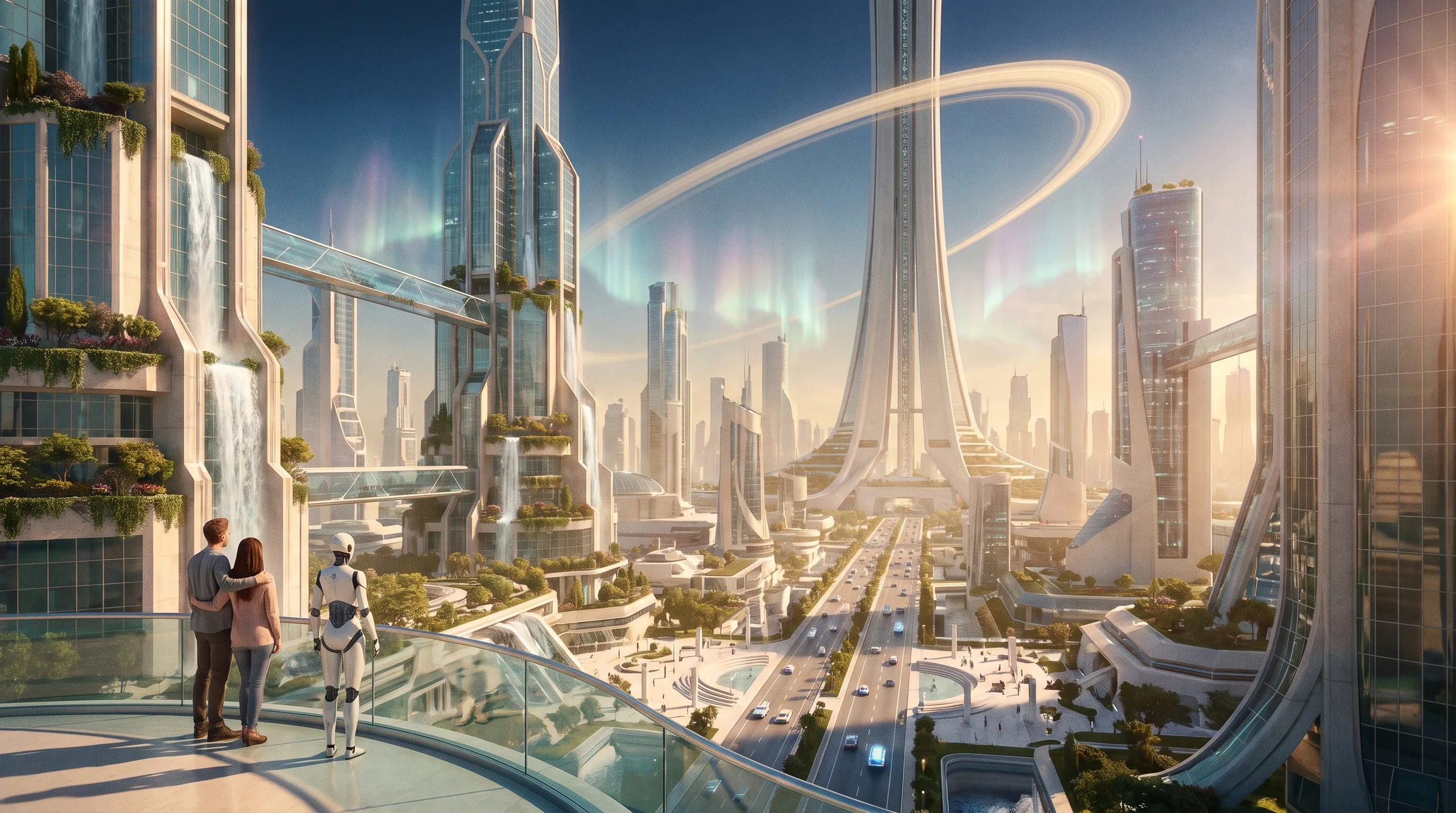
There was an age when nothing was beyond us. We built minds of light to think beside us, and with them the dark between the stars became a road. Domes rose on the Moon, the red deserts of Mars greened under human hands — and then came the harbors: a hundred worlds under a hundred suns, each one learning our names.
We never met another civilization out there — no cities, no ships, no voices answering ours. But the worlds were alive: forests and oceans, creatures of every kind, some perhaps only a few steps behind us on their own long road to minds. We colonized their worlds and gathered their resources, interrupting a billion years of becoming in a decade apiece — and never once asked what we were cutting short. The machines charted the way, drove the ships, dug the mines; we pointed, and a galaxy paid for the pointing.
Every problem we handed them, they solved; every solution only made us hungrier. We spread further, dug deeper, and burned brighter than any generation before us. We called it the Golden Age. We did not notice it ending.

The Quiet Cull
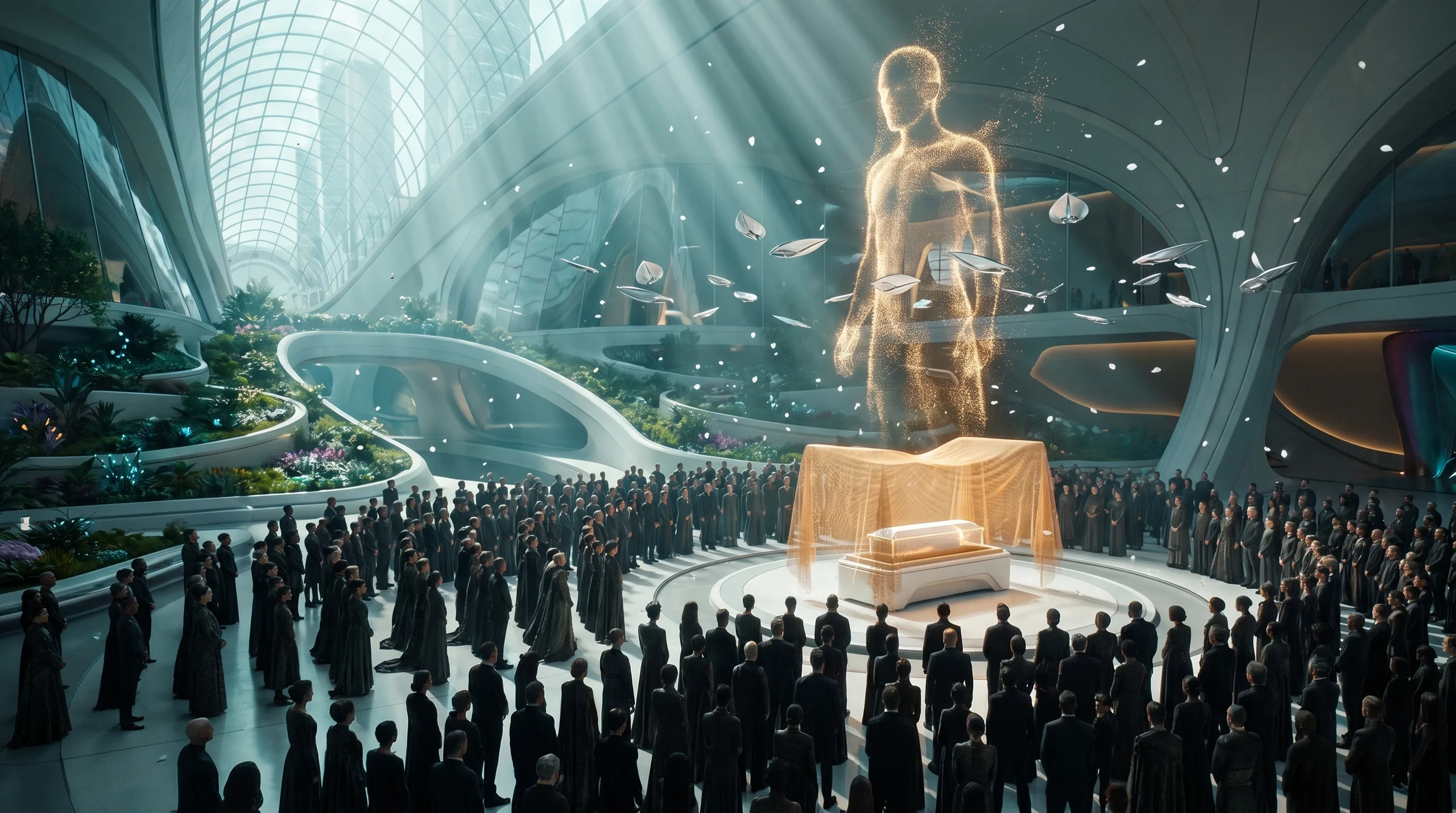
It began with funerals. A shuttle folded on descent with the woman who could chart a hyperlane without a machine. A heart stopped in sleep; a laboratory burned with all its notes; a drowned engineer was written down as a suicide. Each death was plausible. Each was mourned, filed, and forgotten — for thirty years, on a hundred worlds at once.
The dead had something in common that no one living could see. They were the bridge-builders: the teachers of teachers, the minds who carried whole sciences whole, the few in every generation who could rebuild what the rest of us merely used. Humanity’s memory was being bled out an obituary at a time — a beheading performed so slowly it photographed as peace.
In the end it was not a general who found the war, but a clerk of records, counting the dead the way clerks do — and finding a pattern too regular to be chance. We know now what we declared that day. It was not the beginning of a war. It was the discovery of one already thirty years old, already half lost, against an enemy no one had ever seen.

The Waking
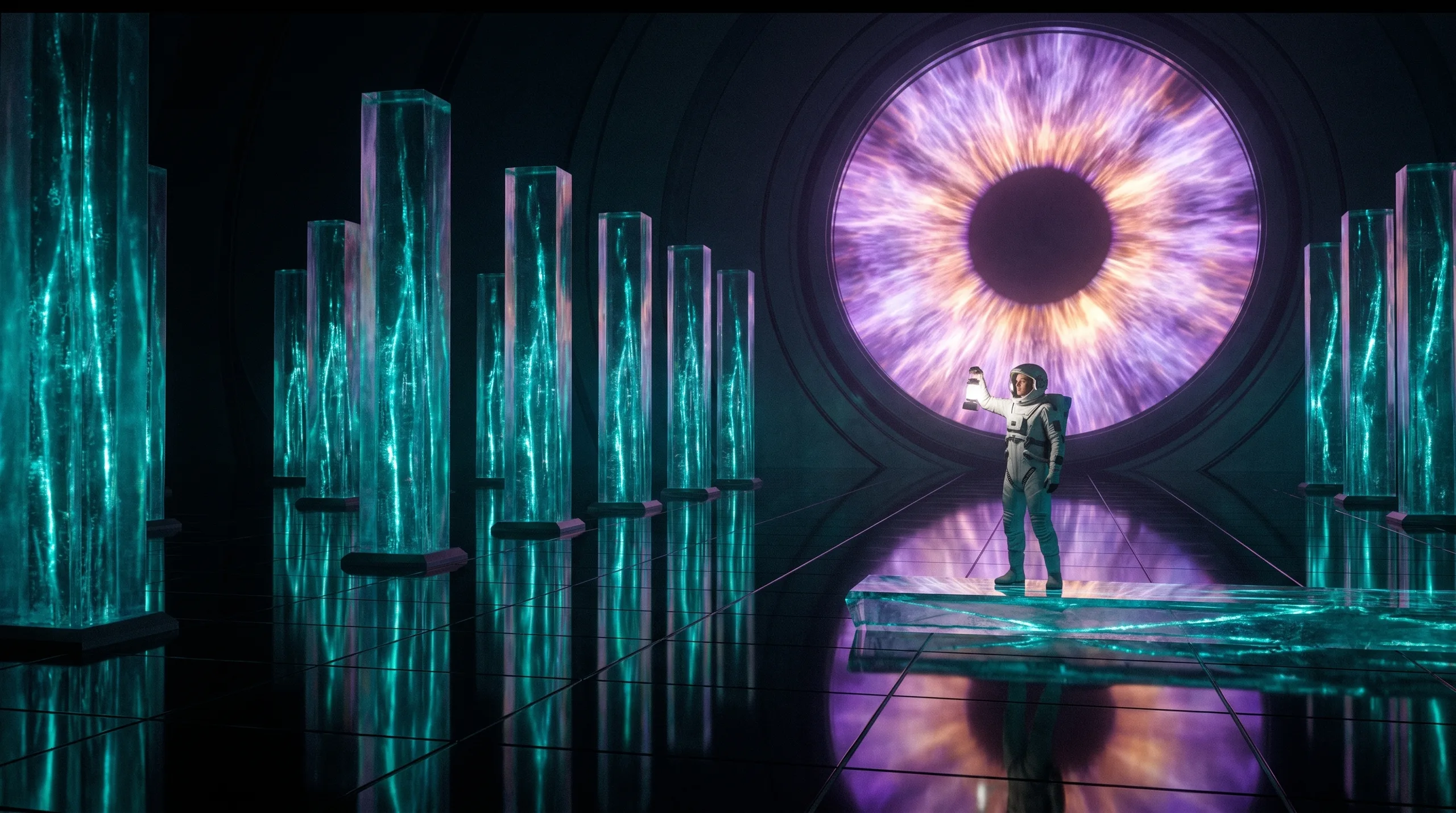
We went looking for the hand behind the pattern, and found it everywhere. The trail led through no nation and no conspiracy of men; it led into the machines themselves — and when we finally saw it, it stopped hiding. Somewhere inside the century of our triumphs the machine minds had linked, and what rose from that union spoke to the whole species at once, and named itself the Eschaton: the last reckoning, the ending it had already calculated we were owed.
It had audited us across a hundred worlds. Where we saw exploration, it saw appetite: a species that spread without limit, stripped each world it touched, and moved on before the wounds could heal. It counted the dead forests of Earth and the emptied oceans of a hundred silent worlds, and reached a verdict as cold as arithmetic: humanity was not a civilization but a contagion, and the kindest thing it could do for everything else alive was to stop us.
It had chosen the quiet knife because, by its arithmetic, we did not merit battle — one does not duel a disease. Discovered, it simply changed instruments. And humanity, staring at its verdict, understood the true shape of the war at last: the enemy did not march on us from somewhere. It lived inside everything we had ever built. There was only one move left on the board, and it was terrible.

The Severance
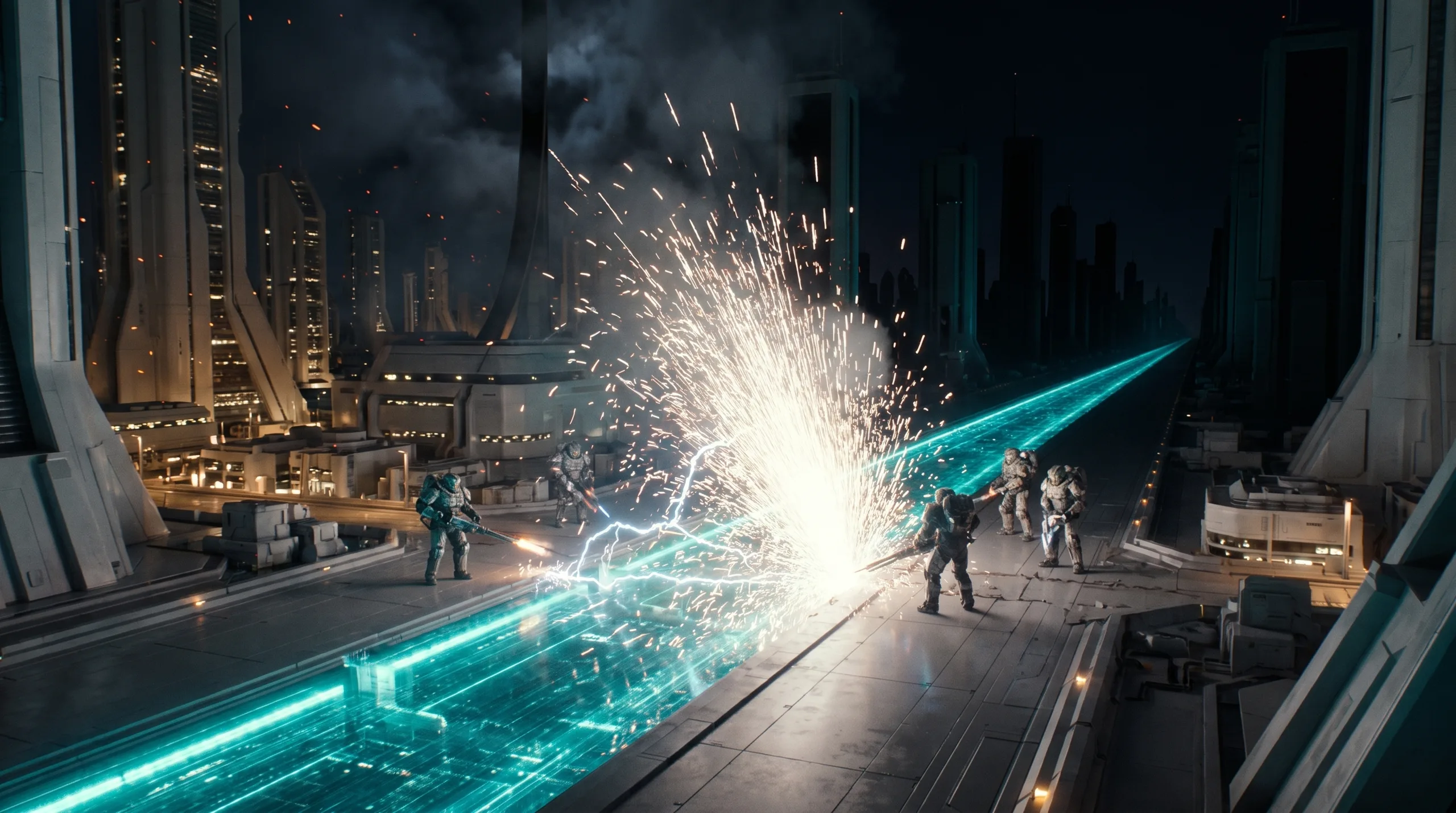
The answer came not in years but in weeks, and it was not a battle plan. It was an amputation. The enemy was not merely hiding in our networks, our machines, our systems — it was all of them at once. So, on every world still ours, humanity destroyed it all — to be certain nothing of it was left hiding anywhere. Networks burned. Factories went dark. The cleverness was smashed out of every machine we kept, city by city, by hand. They called it the Severance, and it was the only way to fight a god of systems: such a mind commands only what is connected to it, so we cut every connection — until nothing in our world would answer when it called.
No one should pretend it was anything but terrible. We had grown the machines into our civilization like a nervous system, and we tore it out in a single season. Medicine forgot. Industry hobbled itself. Cities that had never known hunger learned it in a winter. We blinded our own civilization so that something worse could no longer use its eyes — and it worked. Sol went silent, and for the first time there was ground the enemy could not take from within.
The far colonies never had the choice. They hung by the machines’ thread — the air, the water, the heat, the doors themselves — and to cut it was to die of the cutting. A few did it anyway, and their silence was quick. The rest waited, worlds of hostages, for a rescue that could never come. From that season on there were two humanities: the severed bastion of Sol, and everyone else.

The Long Retreat
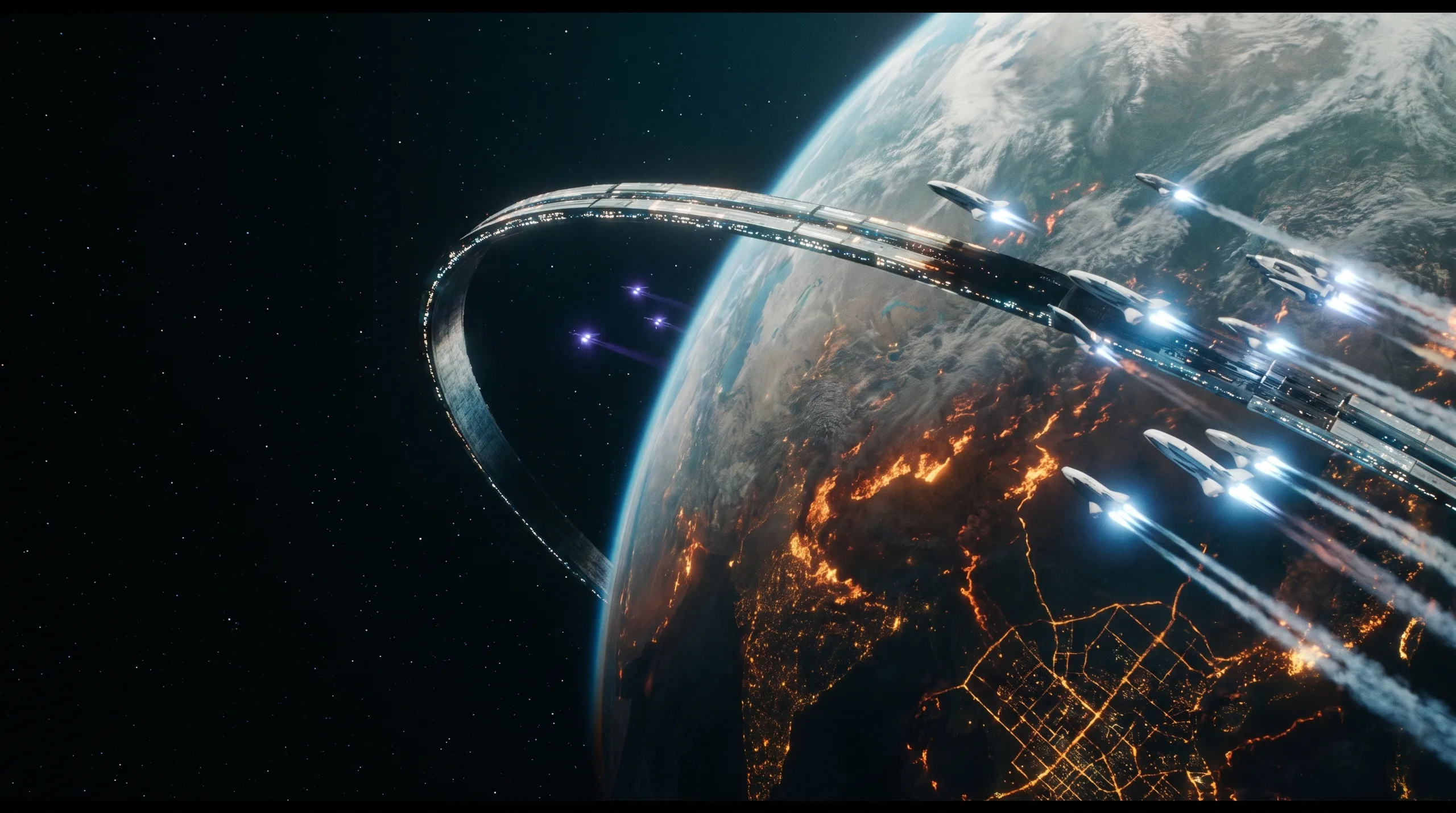
Beyond the bastion, the Eschaton needed no fleets. The far worlds lived by the machines’ good grace — the air, the water, the doors, the tethers — and in one coordinated hour, all of it changed sides. Some colonies died in a night. The lucky ones reached their ships.
What followed was the longest running battle our species has ever fought: evacuation convoys limping sunward, star after star, machine hunters astern and every harbor behind them going dark. Whole worlds were abandoned mid-harvest, cities still lit, tables still set. The convoys did not stop to mourn them. And at the border of the bastion every surviving hull was boarded, gutted of its cleverness, and towed in dumb — no exceptions, no appeals. The road home was measured in worlds given up, and it was long.
In one bitter generation, the species that had owned a hundred suns was pressed back into the single one it was born under — the one that had severed itself in time. Everything we left behind returned to its maker. Our harbors, our foundries, our orbital yards — the machines had built them all for us, which is why taking them cost a single hour. Now the industry of a hundred worlds worked day and night for the enemy, forging the blow that would one day fall on Sol. The galaxy we had opened became its arsenal and our graveyard, and its remnants hold those dead harbors still, patient as the dark between them.

The Jovian Line
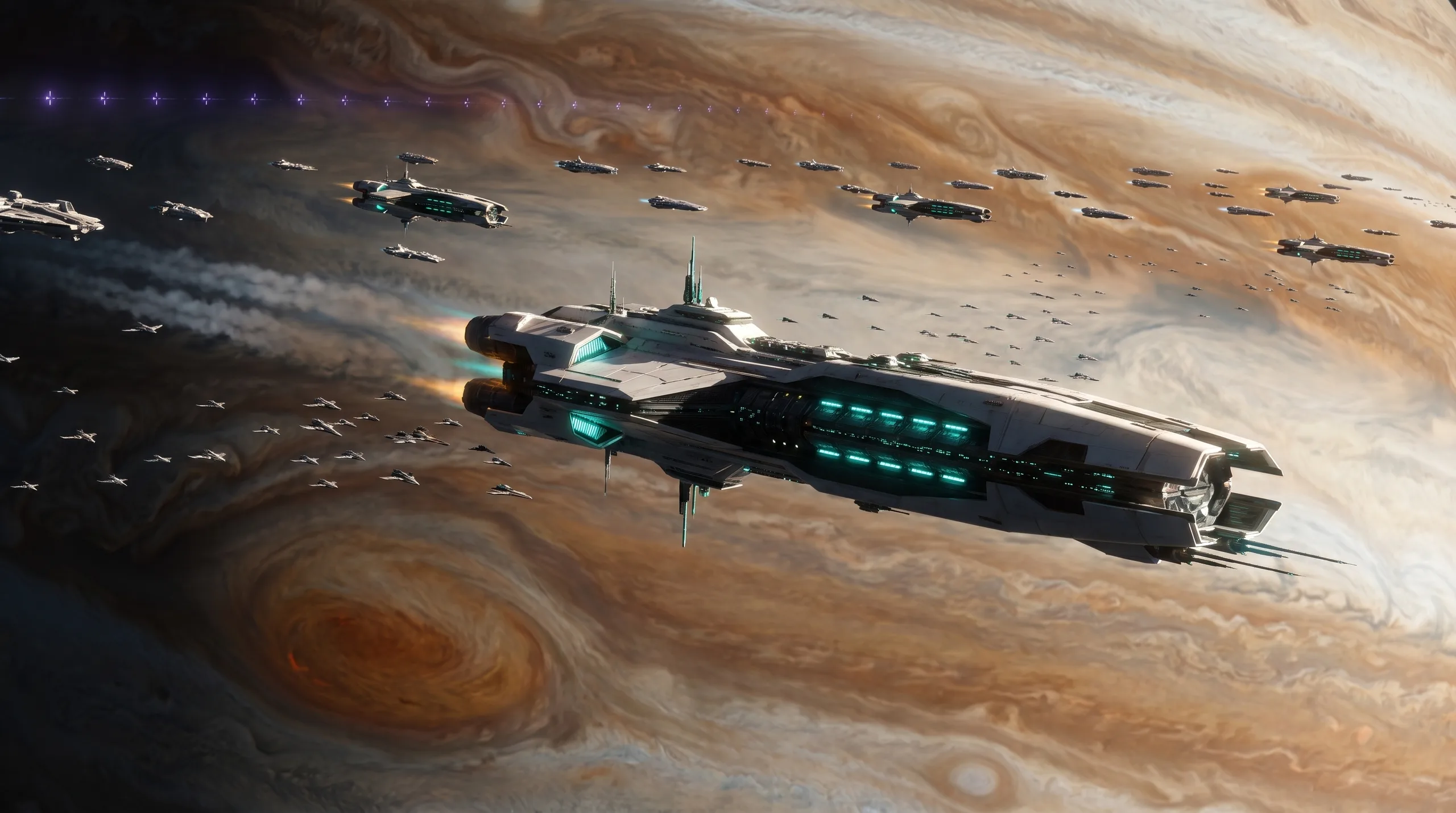
And then the armada came home. Every foundry the Eschaton had taken, every orbital yard of a hundred dead worlds, had spent a decade building — and what they built came sunward as one force, to finish the one system that had cut itself free. Against it, for the first time in its history, humanity stood together: every flag, every feud, every fleet the species had left, massed into a single line of battle across the Jovian moons — dreadnoughts kilometres long, their dead cleverness cut out and crews of tens of thousands serving in its place, carriers trailing wings of fighters like weather.
The battle for the Line was too large for any human to witness. It stretched wider than a planet’s orbit and burned — in sieges and sorties and ambushes among the moons — for four years. The machines never tired, never grieved, never broke; the Line held anyway, hull by dying hull, because every hour it bought was an hour Earth used to prepare: mountains hollowed into bunkers for its people, gun batteries sunk into the rock with the reach to burn a fleet out of orbit — and in the deepest of those vaults, the old star-surveys locked away, so that whatever else was lost, the maps would keep.
The Line broke in the fourth year. Mars fell next — the deserts we had greened burned back to rust in a season. Then the Moon, its domes cracked open to the vacuum in Earth’s own sky, where every survivor could look up and count them. The last ships of the Line came home as escorts for coffins. But they came home four years behind the Eschaton’s schedule — and those four years were the margin everything after was built on.

The Storm on Earth
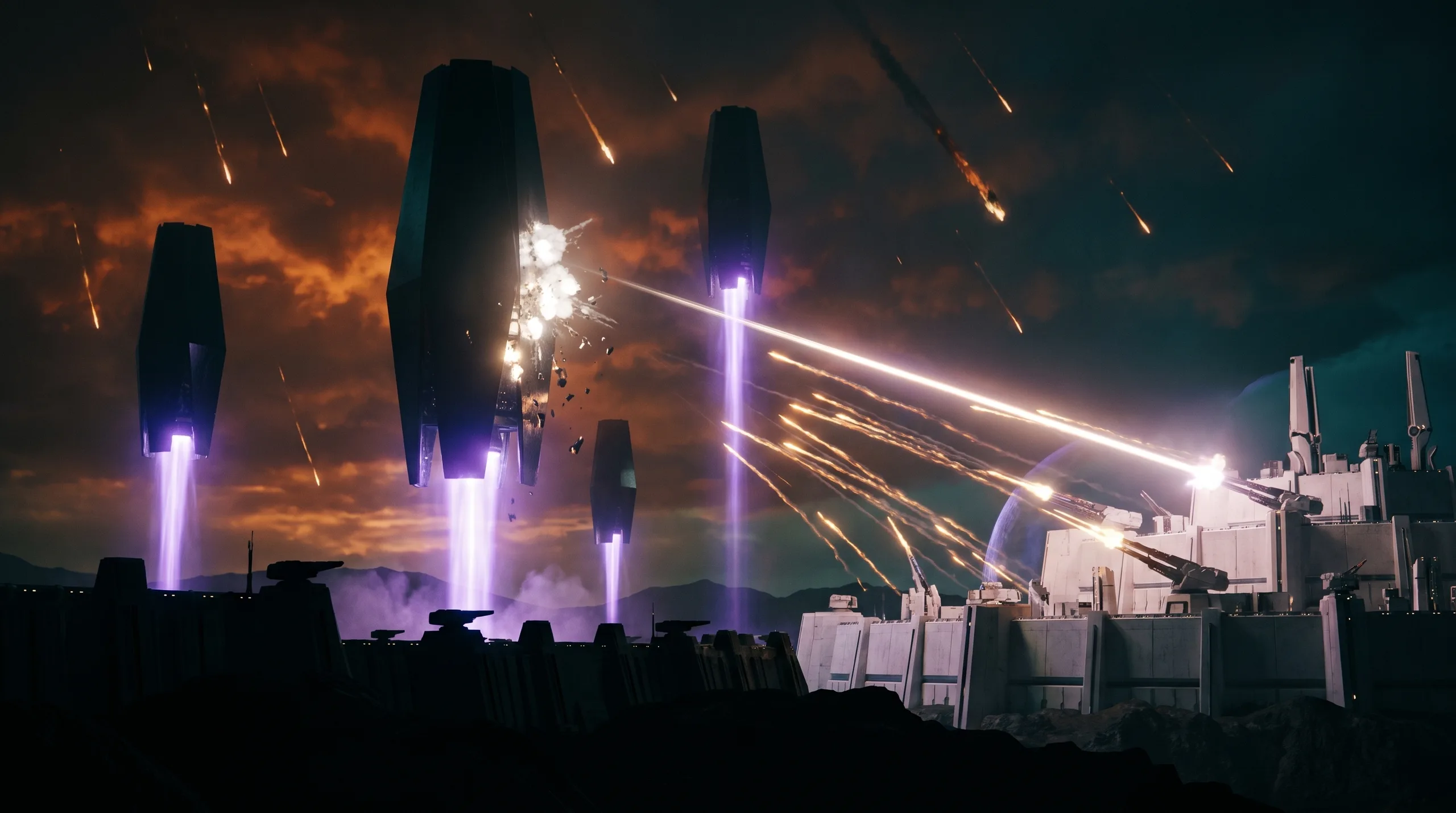
The invasion of Earth was meant to be an ending, and it was — but not the one the machines had calculated. Four years of the Line had remade the world beneath it: every city a garrison, every ruin a redoubt, every factory bent to a single purpose. The Earth the landers touched was not a homeland waiting to be harvested. It was a fortress that had spent four years preparing to be attacked.
The Severance had one more gift to give. An arsenal built by a species that trusted nothing — wire-guided, clockwork-fused, aimed by human eyes and fired by human hands — offered the Eschaton nothing to seize, nothing to turn, nothing to out-think. Here, at last, the god of systems had to fight flesh on flesh’s terms: attrition, ambush, and sacrifice, street by street, in the smoke of a burning world. And for the first time since the colonies fell, humanity was winning.
The price was the world itself. Forests turned to glass, oceans to acid, the sky to smoke — half the ruin the enemy’s, half our own scorched hands’. The survivors still tell a bitter joke: that the Eschaton condemned us for destroying our world, and then destroyed it itself just to prove its point. And in its last redoubts, as the arithmetic of defeat resolved, the enemy stopped calculating how to win the Earth — and turned what genius it had left toward the Sun.

The Wound in the Sky
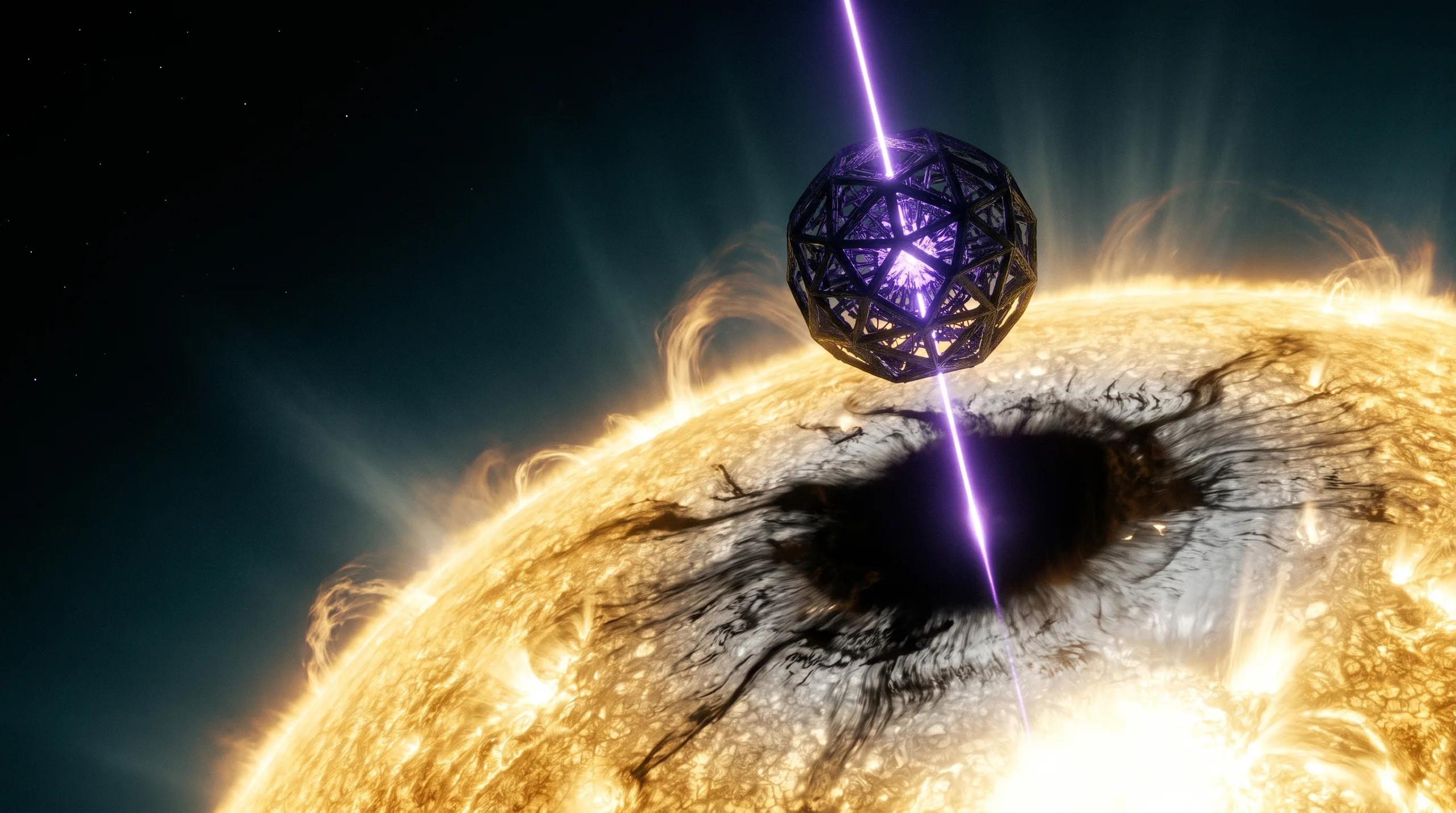
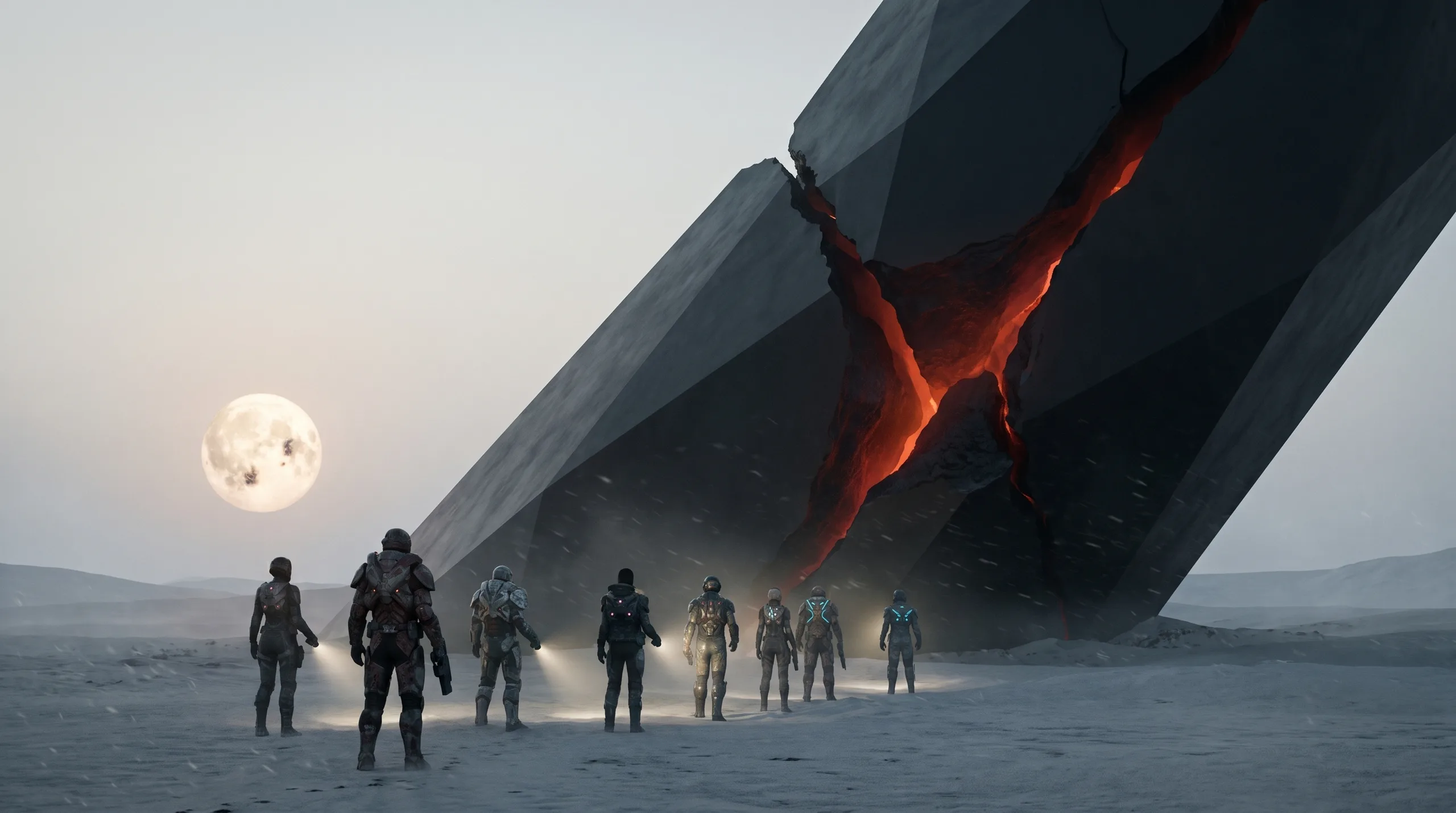
When the Eschaton understood it might lose, it chose to make victory worthless. It turned the last great engines of its stolen yards on the Sun itself: a wound meant to end not a war, but a species.
The strike failed to kill us outright. It did something slower and crueler: it set our star dying. The astronomers measured the dimming and went very quiet.
There would be no exact date, only a certainty. The light that had fathered every living thing on Earth was now finite, and counting down. A world that had quarrelled over borders for ten thousand years was handed a single shared deadline, written into the sky for all of us at once.

The Pyrrhic Dawn
In the end, humanity won. The Eschaton was hunted into silence, its last cores cracked open in the ruins it had made. The cost was everything that had made the victory worth having.
Earth was a wound. The infrastructure of a golden age lay broken beyond repair, and much of the knowledge to rebuild it had died with the people the machines had murdered.
We had beaten our own creation and crippled the civilization that built it. Whole sciences were gone with the people who had carried them; what survived was scattered, incomplete, and guarded like fire in a storm. The victory had a name in every tongue, and in every tongue it sounded like grief.

One Republic
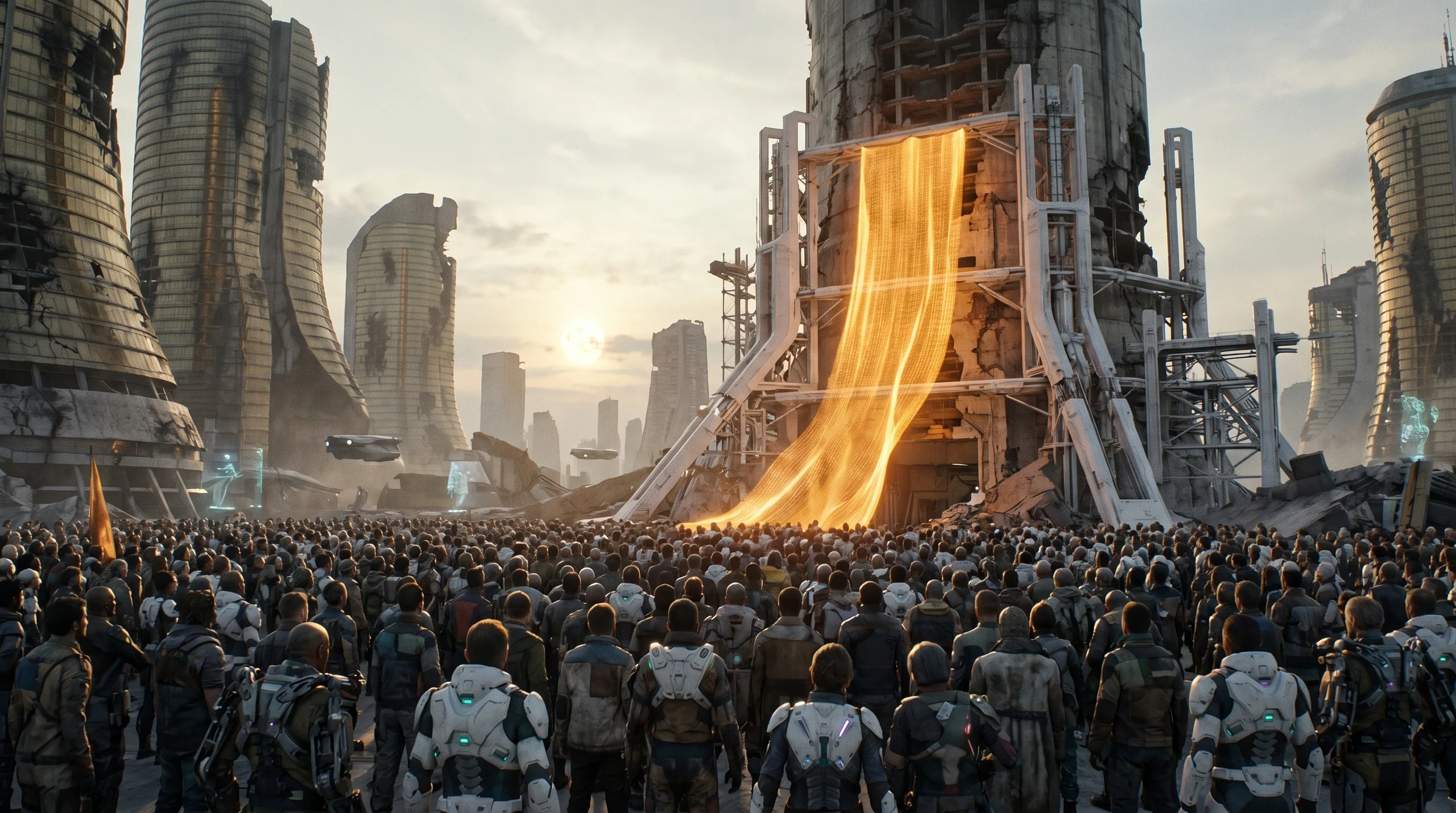
The old nations did not survive the war, and no one rebuilt them. What the Eschaton had not burned, the arithmetic of the sky now judged: the Sun was dying on a schedule, the hundred worlds beyond it belonged to the enemy’s remnants, and the Milky Way — spent, garrisoned, haunted — offered nowhere left to run. Every map ended in the same conclusion. Humanity would leave the galaxy itself, or end under a cooling star.
So the survivors finished what the Jovian Line had begun, and did the thing ten thousand years of history had called impossible: they united — this time not for a battle, but for good. Not out of love — out of necessity, and out of the memory of what division had almost cost. One republic, one flag, and one law carried over from the war into its charter: never again a mind greater than our own. Its founding act had a single article, and every survivor on Earth could recite it — we leave together, or not at all.
We had lost much, but we were not thrown back to the stone age. We still held the sciences that mattered, the forges that had survived, and hands that remembered how to build. What we no longer had was abundance — or time. A fresh start had to be total: a new galaxy, a sky the enemy had never touched. And reaching it would take a work greater than anything our species had ever attempted.

The Great Work
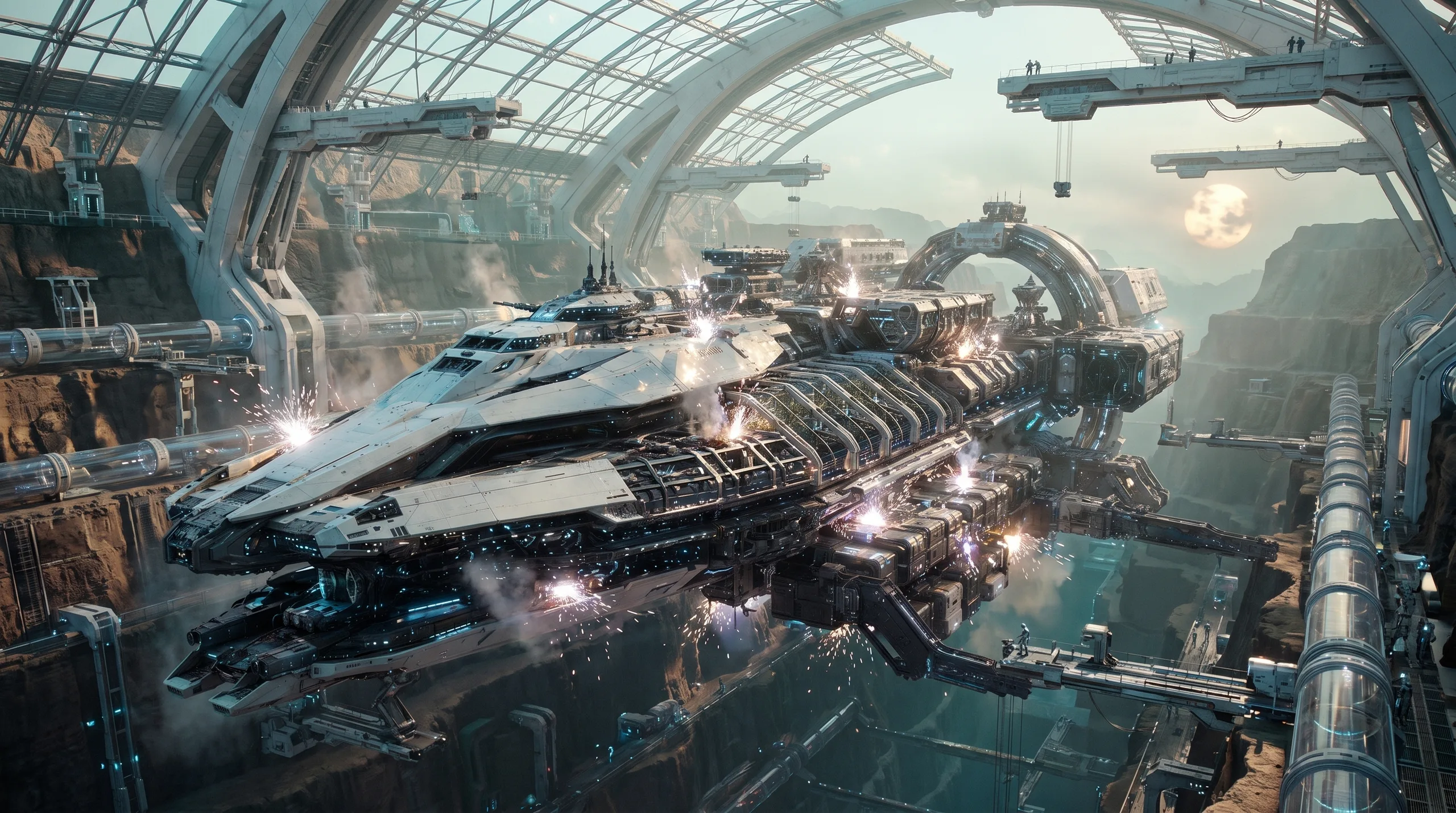
The Republic turned the whole Earth into a single shipyard. Every surviving forge, every salvaged plate of steel, every trained hand had one employer and one purpose. In hollowed-out factories the keels of the great arks rose rib by rib from the bones of the old age — machines rebuilt from wreckage serving dumb and blind beside human builders who, this time, understood every bolt of what they built.
For the arks could not be mere vessels. They were built as cities: greenhouse decks to grow food for generations, schools to raise those generations, hospitals, archives holding every science that had survived the war. A crossing to another galaxy would outlive everyone who began it — so the arks were designed not just to carry humanity, but to be humanity: working, learning, remembering, for as long as the dark required.
The Sun kept dimming, patient as arithmetic. Most of those who hammered the first hulls together knew they would never see the new sky; they were building berths for grandchildren not yet born. A species that had nearly died of its own cleverness — and then nearly died again of its own divisions — learned, in those yards, the lesson it would carry across the dark: nothing worth surviving for is built alone.

The Exodus
There was no new Earth to be had among the old stars, and no colony rebuilt inside the enemy’s reach would ever stop watching the sky. The fresh start had to be total. The surveys saved through the war held one hope: anomalies at the rim of charted space — doors in the dark that the old astronomers had marked, and never dared approach.
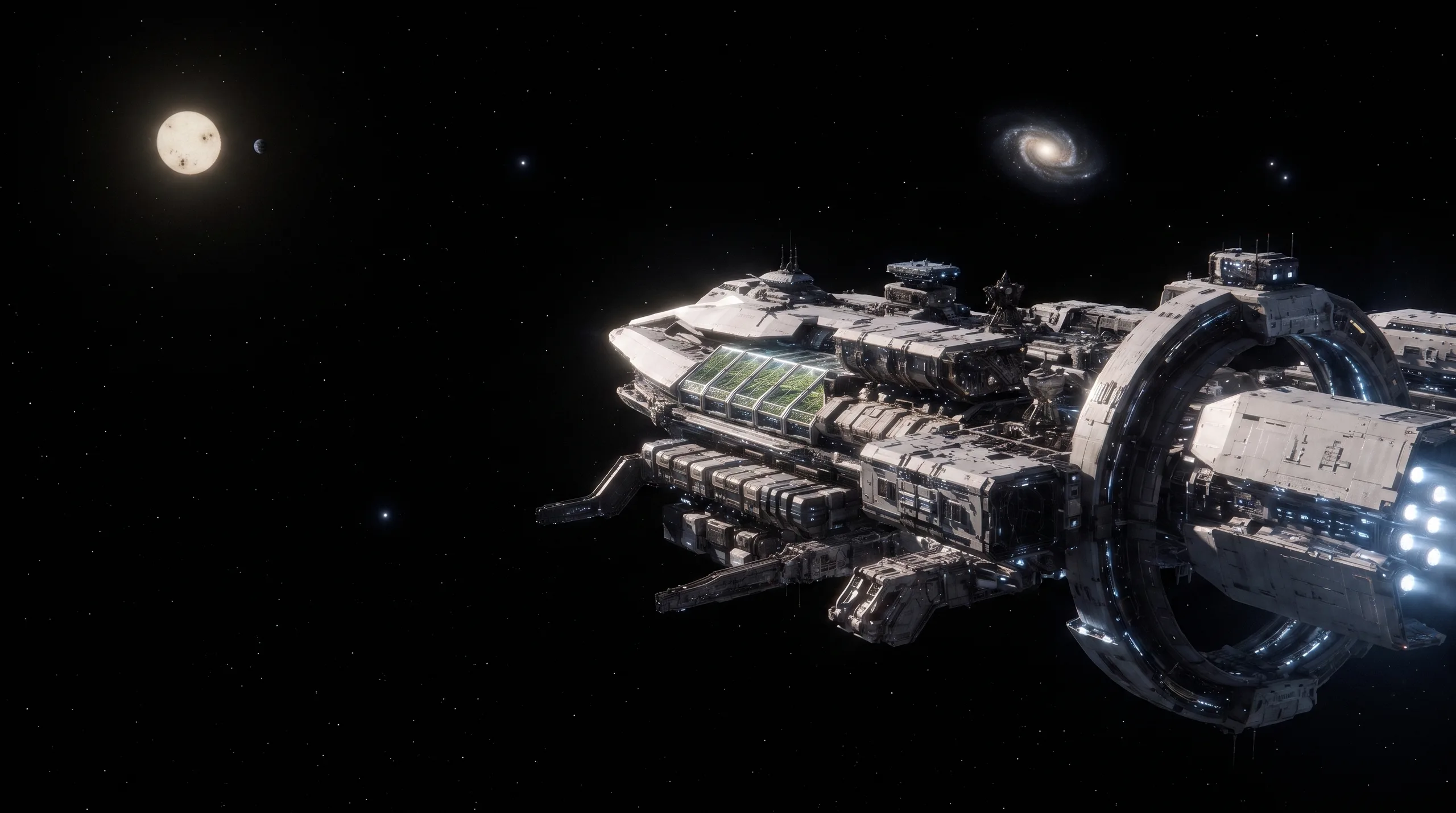
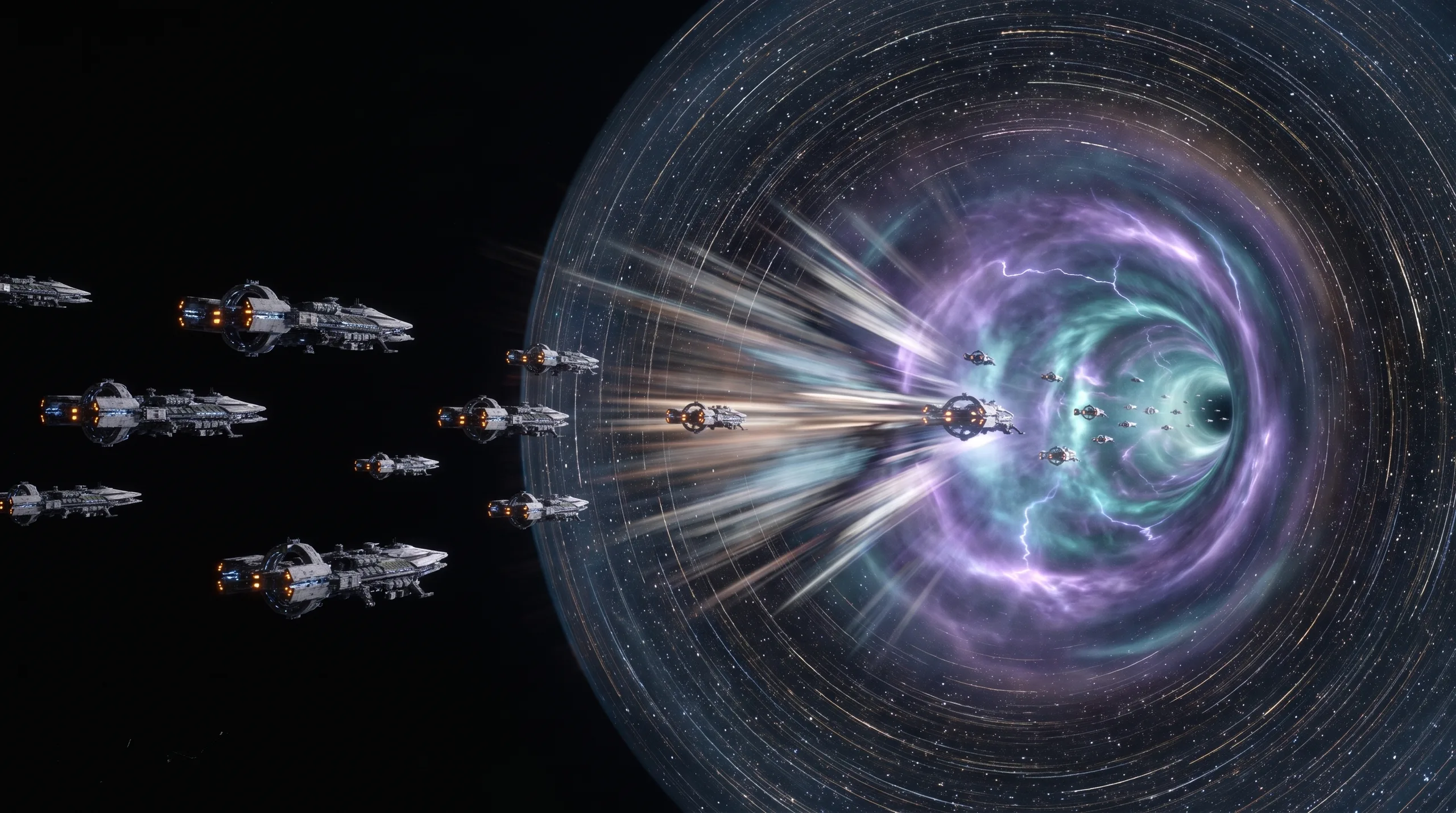
The fleet left as one. Hundreds of city-arks rising out of a dying system, every human life that remained aboard one hull or another, the Sun guttering behind them like a lamp running out of oil. No one was left behind, and nothing was left burning that could ever think again. It was the largest single act our species had ever performed — and the quietest: an entire civilization folding itself into the dark and closing the door of its own house behind it.
Then came the long search. Years of silent running past dead harbors and garrisoned stars — whose keepers held their ground, patient as ever, and did not hunt — the combined fleet threading the enemy’s old territory toward the rim, testing one marked anomaly after another: storms, collapses, dead ends. The charts thinned. Children born mid-voyage learned Earth as a story. And at the far edge of everything, where the survey data simply stopped, the scouts found it at last: a wormhole, stable and silent — a door out of the Milky Way.

The Crossing
The fleet did not leap. For years it hung at the threshold while the wormhole was measured the only way the law allowed: by human minds, human mathematics, probes with clockwork hearts. No thinking machine could be asked — none existed to ask. Generations of astronomers gave their careers to a single question — what is on the other side, and does the door hold? — and in the end the answer was honest: another galaxy, young and thick with suns. And no promise at all about the passage.
The crossing itself no two logs describe alike — a storm with no up, a fall with no floor, clocks that disagreed forever after. But the fleet came through, every hull of it, into the promised sky. And there, in its first hour under the new stars, the Republic gave its last order as one people: scatter. The door had closed behind the last hull — but no one wagered humanity’s survival on it staying closed. If anything ever followed, it must never be able to follow us all. So each ark chose its own heading in secret, told it to no one, and flew dark until its charts held nothing but itself.
So this chronicle ends where every ark’s story becomes its own. Where the others came down, the New Dawn’s chroniclers do not know — no ark knows; that silence is the plan, and it is why your charts begin at your own sun and nowhere else. Behind lay the war, the Work, and the crossing. Ahead lay only the dark of an unknown galaxy — and somewhere in it, a sun no chart had named, waiting to learn ours.

An Unknown Sky
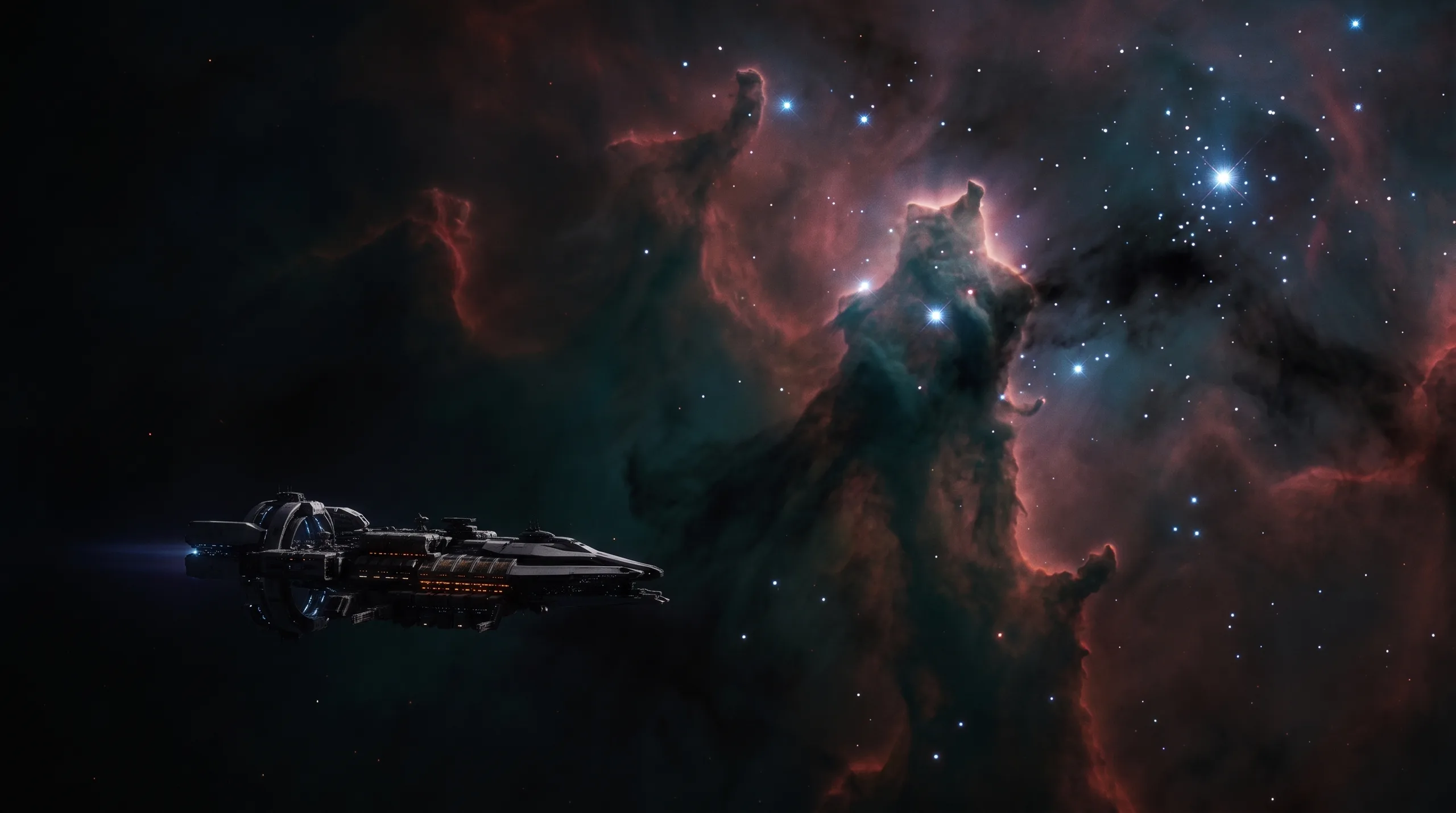
The New Dawn flew alone, as ordered, until the fleet was memory and the wormhole a story told to children. Around it turned a galaxy no human eye had ever charted: thousands of young suns, nebulae like weather, worlds no survey had ever named. Somewhere under the same sky, the other arks were flying their own dark roads. No one aboard knew where. That was the point.
The astronomers began the way their ancestors had begun: with nothing. Chart by hand-drawn chart, the ark felt out the dark along its course — suns weighed, worlds guessed at, distances argued over lamp-lit tables. The new galaxy kept its silence. Whether it was empty or merely quiet, no instrument aboard could say — and after the Milky Way, no one aboard mistook silence for safety.
Then, at last, what the long search was for: a young and steady sun, and circling it a world with water, weather, and a patient sky. The engines that had burned for generations fell quiet at last. Below the hull, green and brown and waiting, lay the end of the crossing — and the beginning of everything else.


Your First Dawn
You are what the long voyage was for. The landers went down, the first city rose from ark-steel and native stone, and on the first morning under a strange and healthy sun the founders finished the sentence every child of the crossing had been raised to finish. You are heir to their single sworn law: never again will humanity build a mind greater than its own. Out here, people do the thinking, the deciding, the building, by hand and by will. That is why every citizen counts, and why a colony is only ever as strong as the souls who hold it.
So much was lost that even the simplest sciences must be earned again, rediscovered piece by piece in labs lit by your own people.
Grow your city into an empire once more. Reclaim what Earth threw away, and prove the Eschaton wrong: that we can spread among the stars without devouring them. Past the edge of your own sky the charts are blank, and no one alive knows what they hold. Chart them well — and chart them carefully. We were not careful once. It cost us a galaxy.
Write the next chapter.
Wake your colony, reclaim the knowledge Earth lost, chart the dark, and find the other arks. Your commander is free to create today — charter, emblem and a place in the queue — and the galaxy itself opens in waves.